RUS in Focus is a patient-led organization for radioulnar synostosis information and community.

Clear information. Real RUS experiences.

We bring scientific information and personal experience into one accessible place — to raise awareness, answer first questions, and help people with RUS find one another.

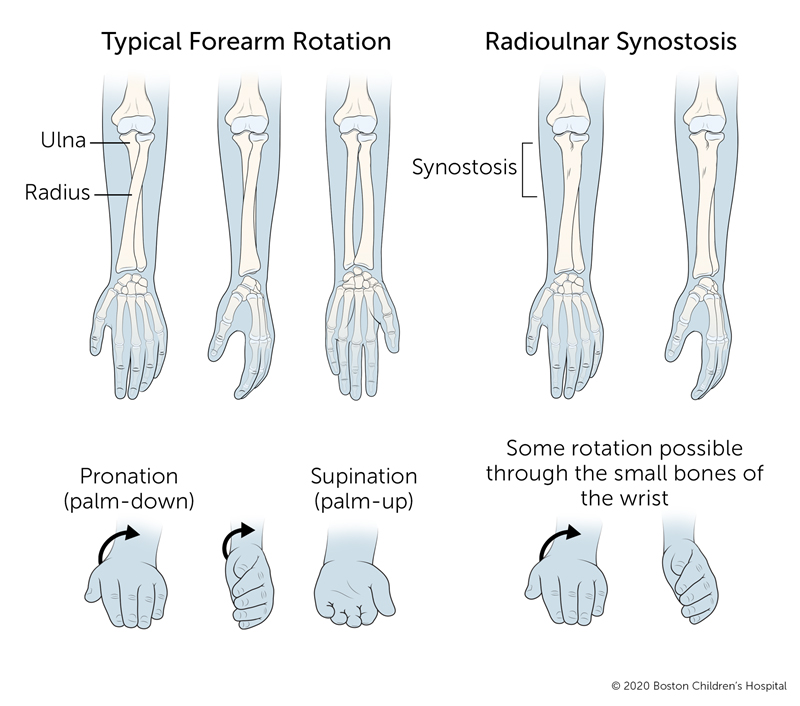
Diagram comparing a typical forearm, where the radius rotates around the ulna for palm-down and palm-up positions, with radioulnar synostosis, where fused forearm bones limit rotation and some movement occurs at the wrist.
Scroll sideways to read every label, or open the full-size diagram.Typical forearm rotation compared with radioulnar synostosis. © 2020 Boston Children’s Hospital.Boston Children’s source (opens in a new tab)Open full-size diagram (opens in a new tab)

What is radioulnar synostosis?

The same condition, explained for two different reading moments.

Medical definition

Radioulnar synostosis is a bone condition in which the radius and ulna of the forearm are partially or fully fused, limiting pronation and supination — the movements that turn the palm down and up. It can be congenital or develop after trauma.

In plain language

RUS is a rare condition where the two bones in the forearm are joined. This can stop the hand from rotating all the way, leaving the palm facing down, up, or inward.

Most people with RUS are born with it. Others develop it after a forearm or elbow injury.

RUS does not always get in the way. Many people live full lives and make small adaptations for work, typing, sport, or daily tasks. Some experience pain or more significant limits in mobility.

“I became a professional musician and have my instruments customized.”

Anonymous contributor

Read all seven stories

Find your way in.

Read the medical context, see how other people adapt, or speak with someone who understands.

Explore RUS research.

Browse RUS-related articles and plain-language summaries organized by topic.

Browse research library